Quick Guide

What is this coffee?

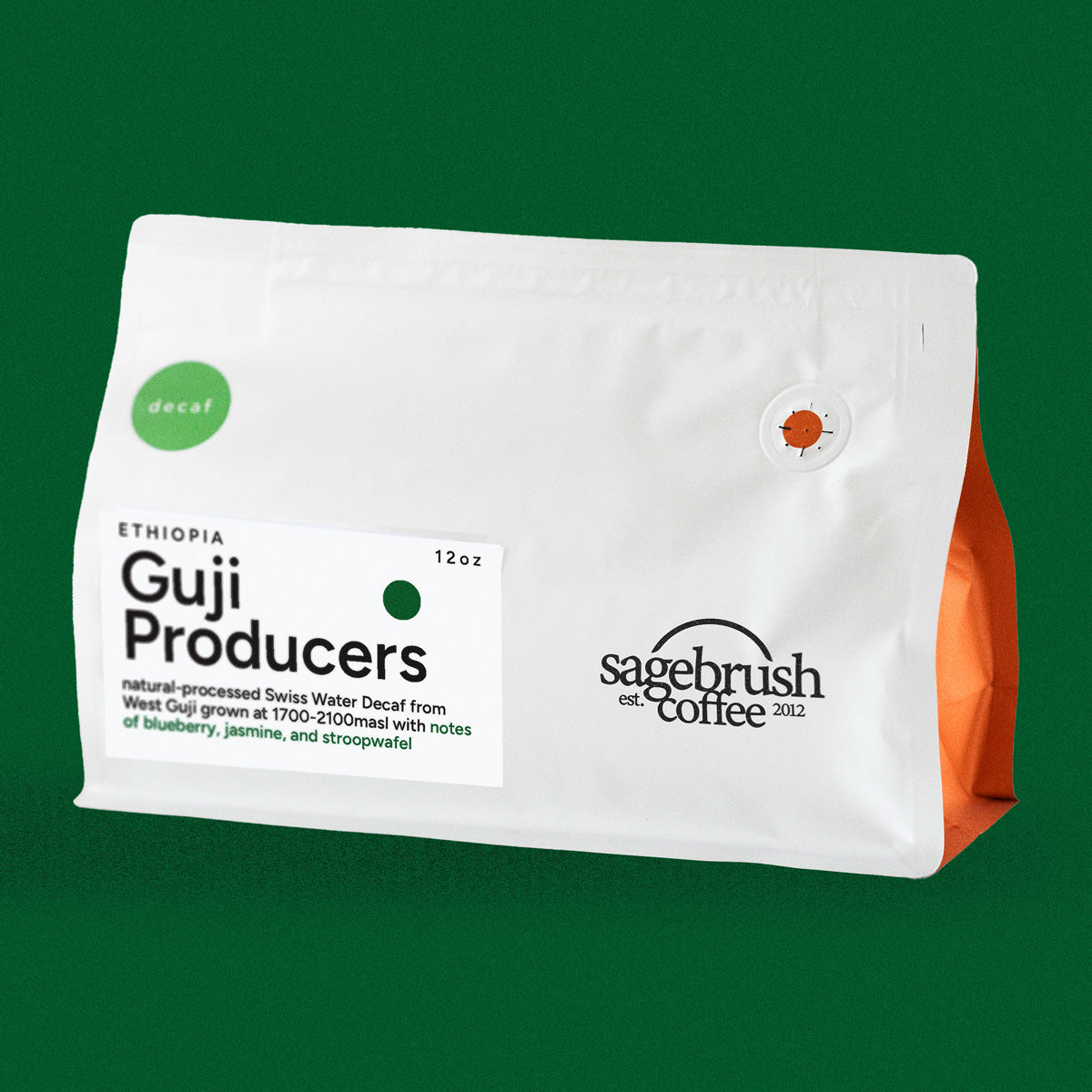
Drink this beauty at all times. It is hard to tell that this coffee is a decaf. The profile is a distinctly Ethiopian cup with lots and lots of berry sweetness and florals. In Sagebrush’s history, we’ve only had one single black label decaf, and in cupping this coffee we found it worth of that second instance. I’m truly amazed at the clarity of profile coming out of this cup, it thrives in a pour over, but does a great job on espresso too. Totally recommend that splurge for a late afternoon indulgence.

Processing Method

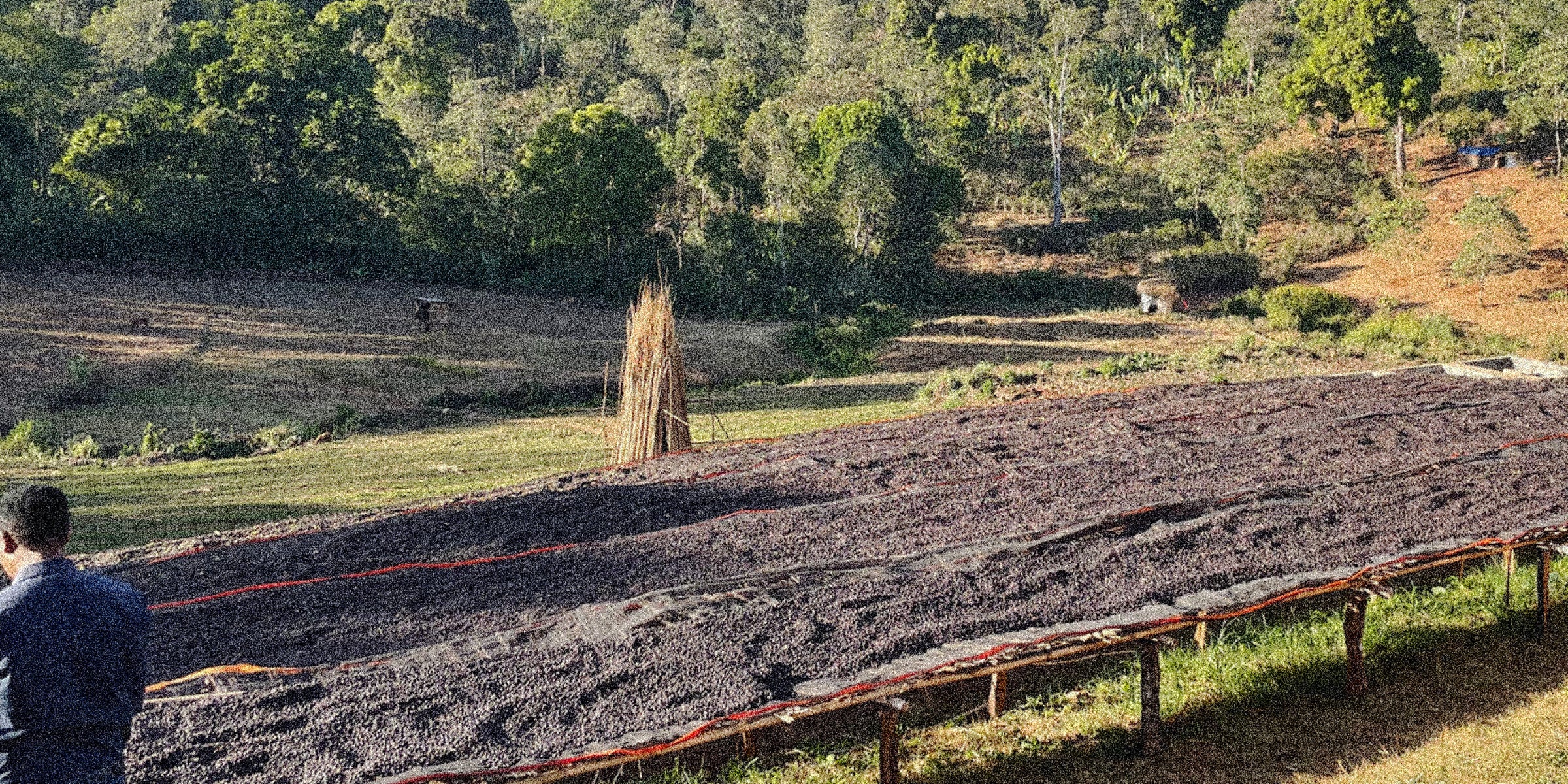
Natural Process- Natural processing dries whole cherries with fruit intact. As microorganisms ferment the sugars, they create bold, wine-like flavors with thick body and mild acidity—extravagant and fruity compared to other methods.

Country

Ethiopia- Ethiopia, the birthplace of coffee and fifth largest producer globally, grows over 1,000 varieties naturally at high elevations. Three key regions, Yirgacheffe, Sidamo, and Harrar, produce distinct profiles from sweet and fruity to wild and jammy, making Ethiopian beans world-renowned.

Altitude

1700-2100masl - Altitude is typically correlative to the potential complexity of a coffee bean. The higher in altitude the coffee is grown, the denser the bean will be, resulting in a more dynamic cupping experience.

Classification

Black Label- Black labels are the best coffees we can find period. Whether it’s a hyper-limited crop or an auction lot, we do not let cost be a prohibiting factor in our search for the finest coffees in the world.

Variety(s)

Heirloom

All about the coffee

Meet Producer Relationships

Ten years ago, I had lunch with Perry Czopp, a local Phoenix barista trainer. He brought along Nella Montero, daughter of Carlos Montero who owns Don Eli farm in Costa Rica. That lunch was so helpful in my setting the direction of my online garage coffee roasting business. Perry ended up marrying Nella and moving to Costa Rica. Now he runs Selva Coffee, connecting Costa Rican producers with U.S. roasters. Don Eli annually delivers coffees in the Costa Rican Cup of Excellence coffee auction, but that's not why we buy from them. We buy from them because of the relationship that started over Portillos in Tempe.

Learn More About Producer Relationships

Heirloom

Grandmother's pearls. A priceless brooch.

When you think of the word "heirloom," chances are you think of some valuable family possession passed down through the generations.

But in the specialty coffee world, the term "heirloom" means something a little different. It refers to older, traditional varieties of coffee that have been passed down through farmer selection rather than formal scientific breeding.

Heirloom Coffee: Ethiopian Landrace Varieties & Flavors

Natural Process

In natural processing, the cherries are picked at peak ripeness and laid out to dry whole—fruit and all. As they slowly ferment in the fruit, the beans develop bold, distinctive flavors. It’s a riskier method, but those fruit-heavy beginnings can dramatically shape the final flavor.

Swiss Water Decaf use their patented chemical-free, water-decaffeination process to remove 99.9% of the coffee's caffeine content. The technique is gentle on the coffee's organic structure, leaving much of the aromatic compounds that affect flavor and aroma intact.

Natural Process

Ethiopia

Blackberry. Jasmine. Citrus. Honey. Few coffees in the world can pack a flavor spectrum as vibrant as Ethiopian beans—and there’s a reason they consistently earn top reviews. If you’ve ever wondered why Ethiopian coffee tastes unlike anything else, the answer begins deep in the country’s ancient forests, where wild coffee still grows today. Because, as you may or may not know, Ethiopia is the birthplace of coffee. 

Coffee Terroir Guide: The Birthplace of Coffee - Ethiopia