
Importer Profiles Main Page •
Back to Importer Overview
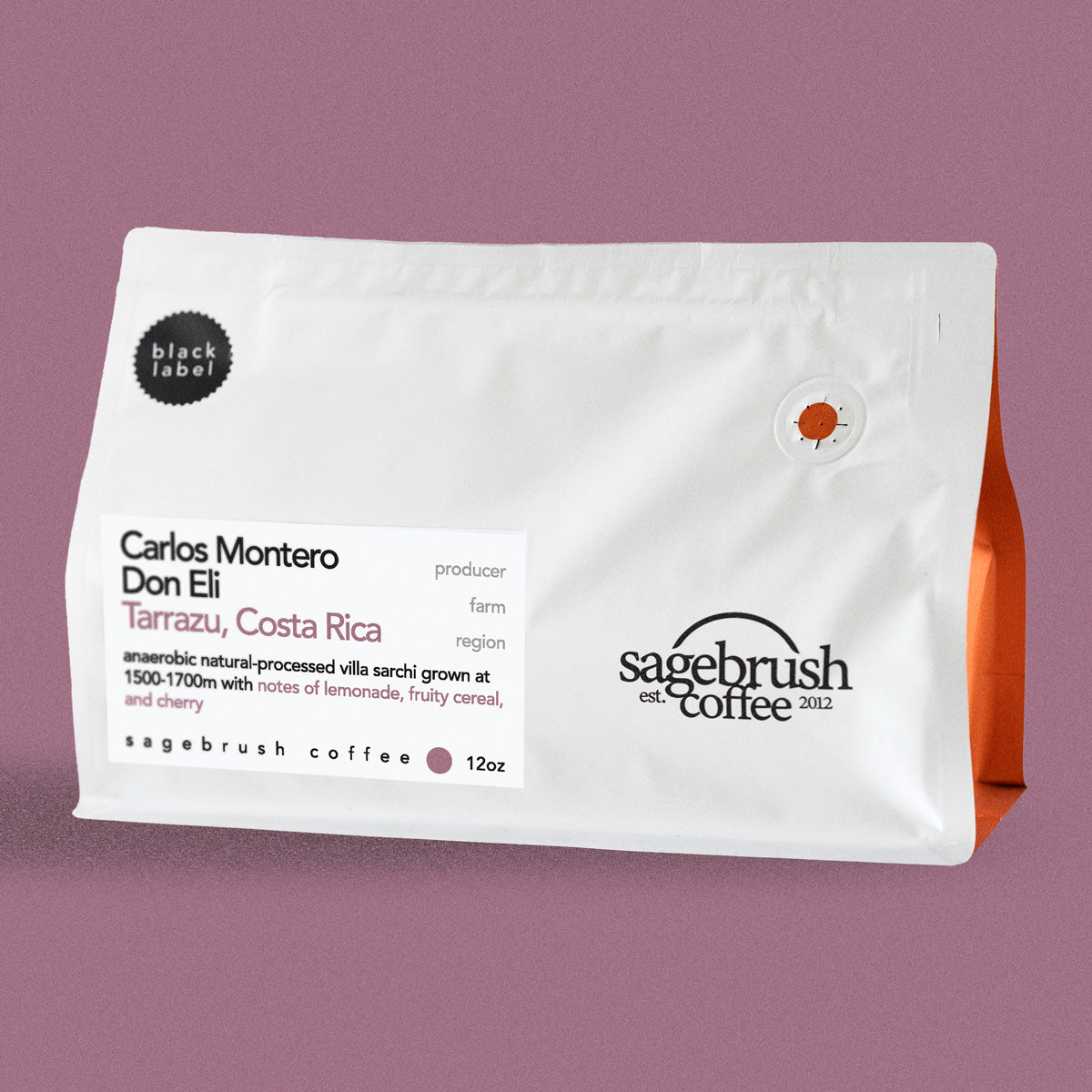
Perry Czopp has been a friend for years and our exporting contact for Costa Rica.
About ten years ago, I had lunch with Perry, a local Phoenix barista trainer, at Portillo's in Tempe. He brought along Nela Montero, daughter of Carlos Montero who owns Don Eli farm in Costa Rica. That lunch was one of the conversations that helped me set the direction of what was still a garage coffee roasting business. Perry ended up marrying Nela and moving to Costa Rica. Now he runs Selva Coffee, connecting Costa Rican producers with U.S. roasters.
Don Eli annually delivers coffees in the Costa Rican Cup of Excellence auction, but that's not why we buy from them. We buy from them because of the relationship that started over Portillo's in Tempe.
Since that lunch, the relationship has only grown. Eden and I visited Perry and Nela in Costa Rica in 2023 -- our first introduction to the Tarrazú region and where we met producers like Carlos Montero and Minor Jimenez. Jonathan, Grant, and I went back in 2025. And Perry and Nela have been out to Arizona many times, along with Nela's father Carlos. At this point, they're not just our exporter -- they're family friends. When we source Costa Rican coffee, it's through Selva.
Perry's Story
Perry's coffee journey started like a lot of ours -- by drinking coffee. His first experience as a barista at a Starbucks nearly soured him on the industry, but a second job at a local coffee shop in Phoenix changed everything. Working with local roasters and seeing the community built around coffee opened his eyes to what coffee could be.
From there, Perry bought an espresso machine for his home and started making better and better coffee. As he connected with baristas and coffee shops in Phoenix and Southern California, he started to see coffee not just as a passion but as a career. He worked his way from barista to shift lead to general manager, eventually launching a mobile coffee cart that grew into a catering business.
But that wasn't enough for Perry.
He got into latte art, hosted competitions, secured sponsors, and eventually worked at a roastery to learn how to roast. But it was a barista competition that changed his trajectory. Needing a green coffee for the event, he was connected with Costa Rican producer Carlos Montero.
In January of 2015, Perry traveled to Costa Rica to work alongside Carlos during harvest season. Through that relationship, he learned about varieties, processing, and origin -- and met Carlos' daughter, Nela. Years later, Perry moved to Costa Rica, learned Spanish, worked as a barista, and together with Nela began to explore the world of coffee exporting.
At the time, he knew nothing about importing, exporting, quality control, or how to find good coffee. But together, he and Nela found a way to send one shipment of coffee, then another, and another. Today, they own Selva Coffee, an exporting company now in its sixth harvest, working with about 40 smallholder producers in the Tarrazú region. Nela comes from a producing family that has been growing coffee for four generations, and that heritage is woven into everything Selva does.
What Exporters Do
If importers are the connection between origin and the roaster, exporters are the connection between the producer and the rest of the world.
Exporting is about knowing where the good coffee is and forging committed relationships. Perry and Nela are interested in people who are not only dedicated to quality and passionate about what they do, but who are in it for the long run. The average coffee producer is 60-70 years old, so a big part of what Selva does is finding the next generation of coffee producers and incentivizing them.
Growing coffee is hard work with historically very little appreciation, and a lot of young people are choosing to move to cities for jobs with benefits. Selva partners with families and shows that younger generation that it isn't just about growing great coffee anymore -- you can come to the U.S. and meet roasters and get to see the impact of your work. It's the human connection that incentivizes people the most.
Once those relationships are established, the job is to create contracts between producers and roasters, ensure quality control through their on-site cupping lab in Costa Rica, and export high-quality coffee. They send the shipment and hope it arrives in good shape, because anything can happen to it after it goes on the boat -- delays, moisture, defects.
Risk and the Realities of Exporting
Exporters take on risk by committing to producers that their coffee will be sold. Sometimes there may be a defect, or a roaster may back out of a contract, but it's rare that Selva is unable to place a coffee.
When problems do occur, the job is to troubleshoot and protect the relationship on both sides. Perry shared an example of a roaster who received a lot with quakers -- underdeveloped beans. They talked to the producer and determined it wasn't a quality control failure but the result of that season's weather. In a case like that, they may replace the lot with another from the same producer to maintain trust and continuity.
The financial and logistical risk of shipping -- delays, damage in transit -- falls to importers once the coffee leaves origin. But in Costa Rica's small and closely connected coffee community, if an exporter couldn't follow through on their promises, word would spread quickly. Reputation is everything.
The Bigger Picture
There's something Perry said that stuck with us: coffee is disappearing.
Coffee doesn't make sense from a business perspective. It's hard, volatile, and there's not a lot of appreciation in it. Less and less people want to do it. A lot of kids in the next generation don't want to do it, and their parents encourage them to do something else. Why would they want their children to break their backs doing all this when they could move to the city and get a job that pays real money with benefits?
There is a reason coffee is getting expensive. It's important people understand that.
On top of that, the challenges keep shifting. Tariffs change, the C-market swings, shipping routes get disrupted, and costs continue to climb -- from fuel and fertilizer to financing and logistics. Then there's exchange rate volatility, which impacts producers who sell in dollars but get paid in Costa Rican colones. Every year brings different challenges, and every year the Selva team faces them together.
And yet, when you ask Perry what he loves about his job, the answer is simple: the people. Coffee without people would just be a bush. He loves hanging out with the people picking the coffee, walking the farm with the producer, seeing visitors get excited when they come to see the process, and watching the growth of the Selva team.
He also loves the volatility. That might sound strange, but it's the unpredictability that keeps him engaged. They never know what challenges a harvest will bring, but each year they face them together -- problem-solving as a team.
That's the kind of energy we want in our supply chain.
Want to understand more about how coffee moves from origin to your cup? Check out our Importing 101 article to explore the bigger picture.