

Quick Guide

What is this coffee?

This coffee really creates a delicious spread of smooth, sweet, chocolatey notes. There’s kind of a subculture around Tanzanian peaberry coffees and we understand why. This coffee presents a perfectly balanced terroir-forward profile with great touches of complexity that don’t detract from the chocolate forward notes. I’m developing this coffee a lot more than other coffees, because this bean can really take it. Highly recommend as a daily driver!

-Jonathan

Processing Method

Washed Process- Washed processing is coffee's most common and reliable method. Through depulping, controlled fermentation, and thorough rinsing, this water-intensive process minimizes variables to produce clean, bright cups that showcase origin characteristics and variety.

Country

Tanzania- Tanzania's coffee is the largest export crop, contributing $115 million annually. 70% Arabica beans grow primarily in Kilimanjaro's Moshi region, accounting for 75% of production. Northern coffees are sweet and tropical while southern beans offer complex, fruity profiles.

Altitude

1500masl - Altitude is typically correlative to the potential complexity of a coffee bean. The higher in altitude the coffee is grown, the denser the bean will be, resulting in a more dynamic cupping experience.

Classification

Brown Label- If not for those who come before us in the supply chain, we would not be the company we are today. In light of that, we see it critical to help producers in whatever way we can to develop in their craft as well.

Variety(s)

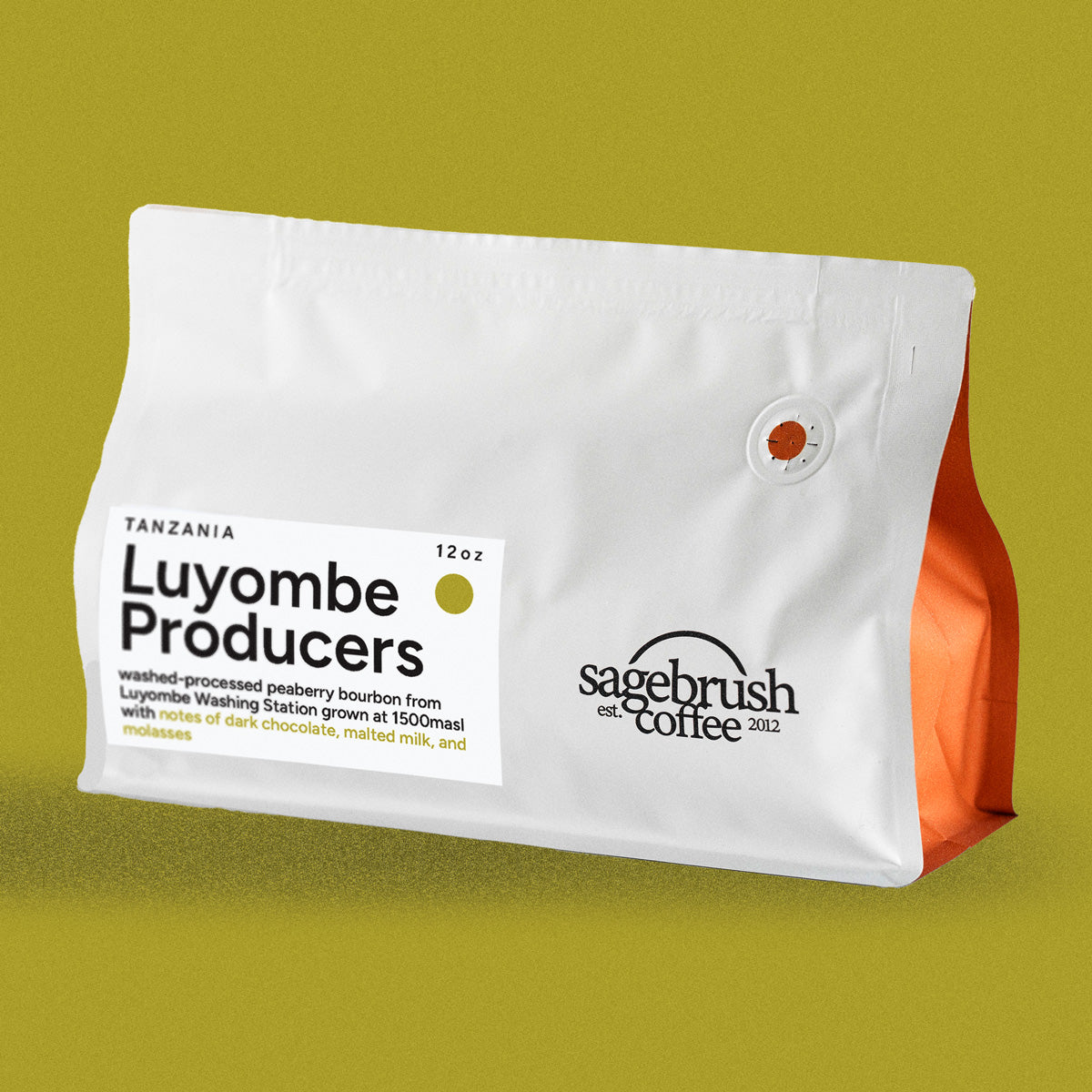
Peaberry Bourbon

All about the coffee

Meet Luyombe Washing Station Smallholder Farms

Luyombe is a coffee-producing area in Tanzania, known for cultivating high-quality Arabica beans. The region's coffee is typically grown at elevations ranging from 1,000 to 2,000 meters above sea level, benefiting from fertile volcanic soils and a temperate climate ideal for coffee cultivation.

Luyombe is known for their washed Peaberries. Peaberry beans are unique, as they develop as a single, rounded bean within the coffee cherry, unlike the typical two flat-sided beans. This natural mutation occurs in about 5-10% of coffee cherries and is often associated with a more concentrated flavor profile.

Tanzanian coffees, including those from Luyombe, are known for their bright acidity and complex flavor profiles. Common tasting notes include black currant, chocolate, and a sweet, fruity aftertaste.

The coffee industry in Tanzania is vital to the country's economy, with approximately 90% of farms managed by smallholder farmers.

Learn More About Luyombe Washing Station Smallholder Farms

Peaberry

In the world of specialty coffee, some of the most intriguing discoveries happen by accident. Natural mutations that create entirely new varieties. Processing experiments that unlock hidden flavors. And sometimes, a coffee cherry decides to do something completely unexpected—producing just one seed instead of two.

This single seed is called a peaberry, and it's one of coffee's most fascinating anomalies.

Peaberry Coffee: Natural Mutation Guide & Flavor Profile

Washed Process

In the washed process, a machine removes the cherries’ skin and pulp, and the remaining beans are left to ferment in water. It’s by far the most common way coffee is processed—but makes this method so popular?

Washed Process

Tanzania

You can break down the history of coffee in Tanzania (tan•zuh•nee•uh) into three eras, their ancient beginning, their period of colonization, and their current post-colonialization era. Each era has brought significant changes to coffee production. The current cultivating climate has shifted from a lot of government intervention to more freedom allowing for more privatizing of farms and more individual responsibility for farmers. Tanzania coffee production is a testament to the resiliency of people overcoming obstacles to see a better quality of life.

Coffee Terroir Guide: Tanzania is More than Peaberries