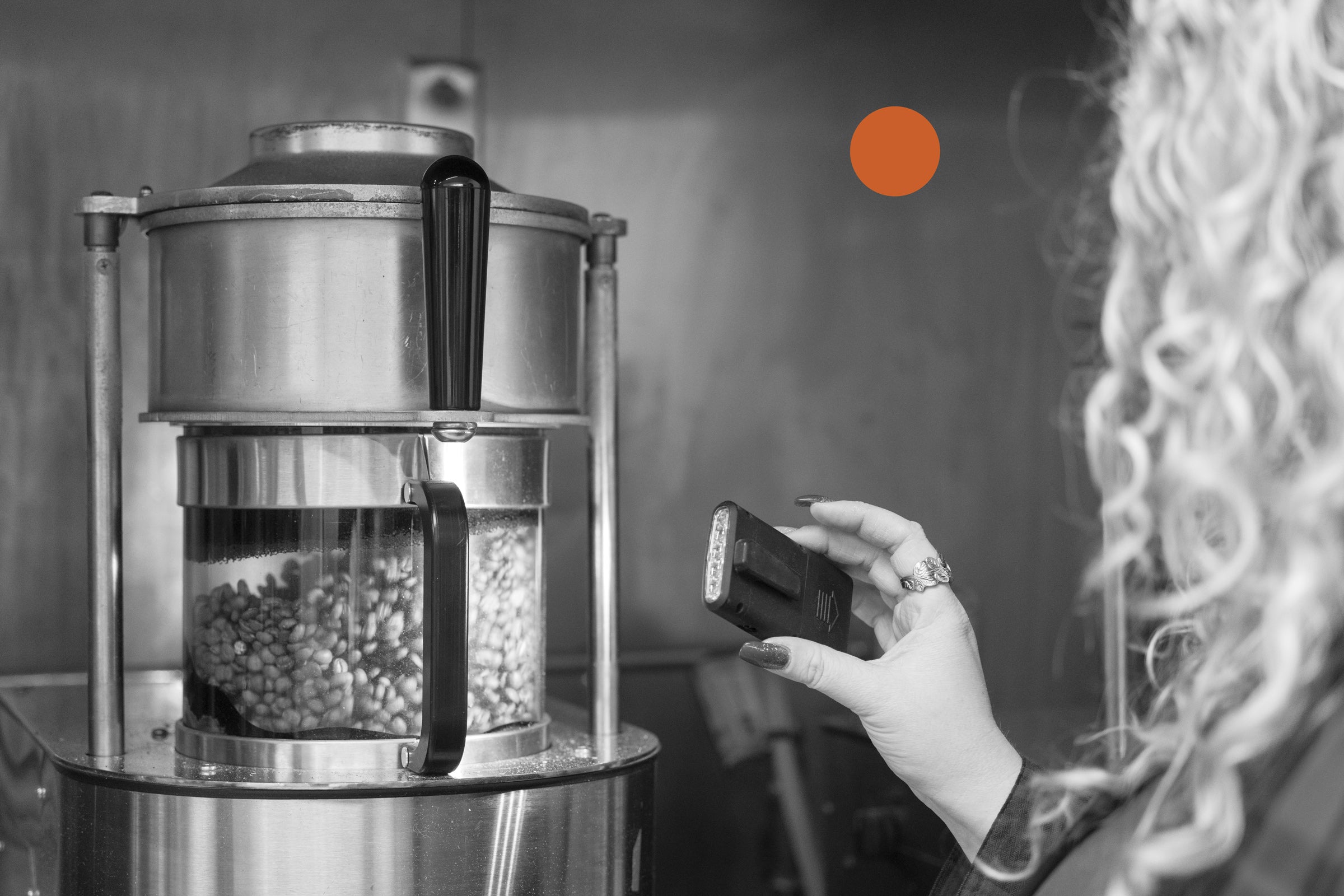
I'm sure that you've seen notes on our website about how 'We don't roast until you want it." or "Roasted Fresh After You Order", but have you thought about why and how we setup our business to do that? If you have, you'd realize that not a lot of others do it this way. I think they don't for a couple of reasons, 1) it's expensive 2) it's pretty tricky. The expensive comes from our batch sizes. We've built our shop around crazy small batches and a planning system that helps us run multiple batches at once and in series. If you came into our shop while we're roasting it is cool to see. Unfortunately, we usually lock the doors during this time, because it takes a crazy amount of concentration to pull off. I don't know if you've ever roasted coffee before, but the process ebbs and flows and changes a little each time based on environment and batch size and bean. Roasting a batch of coffee is a complicated process. Now imagine someone doing 4 batches at the same time on 4 separate roasters. We do this with the help of some really great software and all 5 of our senses.
So we talked about how we're able to keep the batches small enough to allow our customers to request a roast date, but I want to talk a little bit about our daily process.
As I said above, we never roast a bag of coffee until after it is ordered. So each morning we run a 'picklist' report of all of the coffees that are scheduled to roast that day. This typically happens around 7am and at that point, we tag those orders to ship and anything that comes in after that gets pushed to the next day. We then plan our batches and start roasting. We'll finish making and stamping the bags, fill them with the coffee that we just roasted, package, and ship. If there is extra coffee, we take it home and drink it or and yes this heartbreaking thing happens, we throw it out. This is why we are super careful about batch size because no one wants these precious beans in the trash.We ship everything on the day it was roasted using USPS priority, which USPS promises is 2-3 day. This works perfectly because most beans need 48-72 hours of rest after being roasted for optimal flavor. Coffee brewed the day after roasting isn't very good. There is too much CO2 build up in the beans that need to degas.
This Process takes some time and means that you could get coffee 4 or maybe 5 days after your order. Let's follow an example:
If an order is placed about noon on a Saturday, it doesn't make Saturday's batches. USPS doesn't ship on Sundays, so we take a day off each week. Then we take Saturday afternoon through Sunday nights orders and ship those on Mondays (those are always crazy days in the shop). We would roast and ship that order probably around noon on Monday. That means that the coffee would likely be delivered on Wednesday and the customer would drink it on Thursday (5 days after they placed the order). But it will be perfect in that sweet spot of 48-72hrs after roast. Process design perfection!
We know this process and delay requires some patience and goes against the Amazon Prime same day delivery world, but we believe it's worth every second to get some of the best fresh roasted coffee out there!